Friday, January 24, 2014

Picture Perfect

My friend and fabulous photographer Shaun said the other day that he's spent so much time and gas in the last month driving around looking for a snowy owl to photograph. It seems they are hanging out on the south shore but not venturing up here to the cold and snowy northwest.
Despite his failure to find a snowy owl, he did manage to find something to shoot.
Personally, thanks to their sudden proliferation in this province, we've seen lots of photos of snowy owls. Now, this fella in the tree, that's not something we get to see every day.

Try not smiling at the porcupine in a poplar tree


Wednesday, January 22, 2014

In Conversation With...Shirley Bidwell

First published in The Oxford Journal on Wednesday, January 15, 2014, by Sara Jewell Mattinson


Living with Alzheimer disease can be described like this: The spouse with dementia is travelling in a foreign land where he doesn’t  know the language or the customs. He relies on his spouse to be his guide and translator. Without her at his side, he may become lost and confused.  
It’s an apt analogy for Shirley and Tony Bidwell whose best memories are of their travels around the world. 
“I was getting very forgetful,” says Tony Bidwell, a retired biology professor and author, who was diagnosed with Alzheimer disease in 2011. “That’s one of the problems with the disease. I’m working with a tool, a hammer, say, and I’ll put the hammer down and not have the foggiest clue where I put it.”
Tony claims the diagnosis hasn’t affected him very much. 
“I feel absolutely fine. I have no problems whatsoever. I’m in good health and I’m active. I keep busy. I walk at least four miles a day,” he says. “The major problem is simply short-term memory loss. My long-term memory doesn’t seem to be too bad. At the moment, I’m writing my autobiography and I can remember almost everything that happened. Except everything that happened yesterday.”
Tony was born in Halifax but lived all over the world because his father was in the Navy. Shirley was born and raised in Upper Sackville. I’ve joined the couple at their lovely old farmhouse on the Wallace River that they bought, renovated and then retired to in the 1970s. Since they moved for Tony’s work as a university professor (until their children were born, Shirley taught biology at the university level), living in Kingston and Toronto, Ontario, as well as Cleveland, Ohio, the family spent their summers at the Wallace River property.

Tony has played piano since he was a boy and learned music mostly by ear. He continues to play over 500 hymns and enjoys music as much as ever.

After a visit with the gregarious and charming Tony, Shirley and I drive a short distance along a winding, snow-covered back road to the home of their youngest daughter, Gillian Allan (the Bidwells have four children; two daughters live nearby, another daughter is in Halifax and their son lives in Kansas). 
Shirley says she was suspicious there was something wrong long before the diagnosis in 2011.
“Tony did a lot of the banking online and he’d go in and not be able to tell the difference between a bank statement and our Visa statement. We were talking about that and I realized if he doesn’t know the difference between these two then he has a comprehension problem. It wasn’t long after that I took over all the banking.”
Geriatric specialist Dr. Kenneth Rockwood  told them that Tony is  in the early stage of the disease so his symptoms are mild. 
“It’s emotionally draining,” Shirley says when asked to describe her caregiving experience. “I have to be prepared for the kind of conversation we’re going to have so it doesn’t lead to a confrontation. I have to change how I initiate a conversation. Things I want to talk about, I can’t. He’ll say to me, ‘You’re not explaining it carefully enough’ and then I know he’s not following the thoughts. He can hear the news and take it in as long as the news is on but then it’s over.”
Gillian explains why most people wouldn’t be able to tell that her father has Alzheimer disease. 
“He has very good coping mechanisms and extraordinary verbal skills so he can keep a conversation going very well. It might not be an accurate conversation, though,” she adds.
“I don’t correct anymore,” Shirley says. “It just causes too much upheaval. That’s more or less the change I’ve had to make: letting go.”
Shirley describes both she and her husband as Type A personalities who are driven and focused and accomplished. 
“Tony is a perfectionist,” she says. “He can’t let anything slide. It has to be the best. And now it’s more so. The salt and pepper has to be exactly right in the cupboard and if I happen to move it to get something out, I don’t put it back because I know he’s going to do that. You have to let things simply roll over you. Which is unusual for me.”
Her husband frequently tells her there is nothing wrong with him, that he feels fine. 
“He says to me, ‘You don’t let me do things, you think I’m incompetent. Well, I am competent.’ He cannot see anything wrong,” Shirley says. “I can’t explain the breakdown of the brain cells that won’t allow him to do complicated thought processes anymore. Dr. Rockwood has explained this to Tony but he forgets it as soon as he leaves the office.”
What Shirley found more difficult to deal with than the diagnosis was telling their close friends. 
“It was the public stigma that was most hurtful.”
Gillian says people are already asking her if her father still knows her. 
“We’re a long way from him not knowing us,” she says, “but people’s understanding of Alzheimer disease is that you immediately don’t know anybody and you don’t know where you are and you get lost. I tell people to call, to drop in.”
I ask Shirley how she copes with the changes in her husband, in their marriage. 
“It’s love,” she tells me. “It just has to be love and forgiveness. I learned a long time ago that forgiveness is the best way to happiness. If you hold a grudge, the grudge is hurting you more than the other person. And you don’t take personally the things that are being said to you. I know that he is ill. I’m not ill. I’m the one who should back down, I’m the one who must avoid this. You take on that role.”
Yet dementia will be only a very small part of their long life together. What is Shirley’s best memory of their six decades of marriage? 
“Travelling together,” she says with a smile. “We did a lot of that, with the children, when Tony was lecturing. We did China, Russia. I think of those wonderful travels we did, hiking and climbing mountains – we climbed in the southern Alps in France. Those were tremendous times together. We bicycled in France. I think that was our greatest excursion.”
When I turn to ask Gillian some questions, there are tears in her eyes. 
I recognize the toughness in Shirley, the wife as caregiver thinking for two, and the emotion in Gillian, the daughter witnessing this new, unplanned journey with dementia that both her beloved parents have now embarked upon.

Tuesday, January 21, 2014

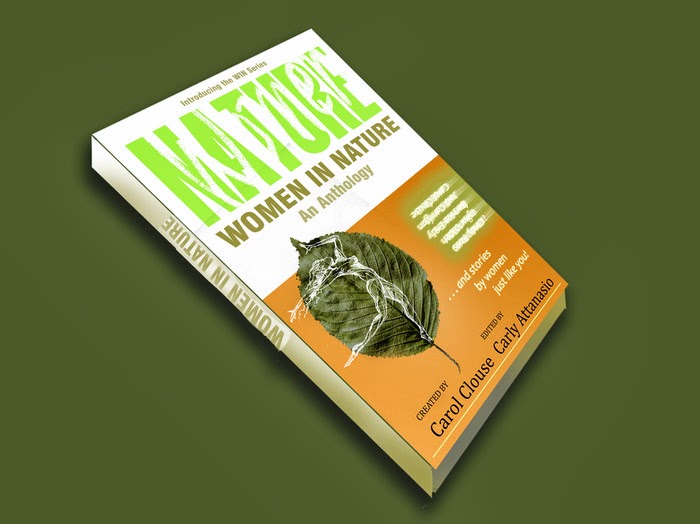
Women In Nature: An Anthology

An essay I wrote about discovering the pleasures of walking in the woods at my (then) new home in the country was selected for an anthology being released this spring by Louise Grace Publishing (www.louisegracepublishing.com) called "Women In Nature: An Anthology".


The essay is entitled "In The Woods I Am Invisible". It is inspired by a poem by the wonderful Mary Oliver and I'm so pleased it has found a home in this anthology. The essay celebrates the joy of exploring the living world around me -- when marriage brought both love and 72 acres into my life -- including the thrill and potential challenge of co-existing with wild animals (mainly bears and coyotes).

For this emerging publisher to get started on this project, and be able to produce future "Women In Nature" collections, the publisher has launched a fundraising program:

Please check it out. I hope you will consider supporting this nature-friendly publishing project. 
Every dollar counts!


Wednesday, January 15, 2014

Laughing Out Loud In An LOL World

First published in The Oxford Journal on Wednesday, January 8, 2014, by Sara Jewell Mattinson


On the evening of Monday, December 23, the antenna that connects us to the great Internet satellite in the sky was too coated in ice to function. 
We spent five days without access to the world wide web, making it an old-fashioned Christmas at our home: Lots of snow, heat and power, and no computers.
If the thought of that makes you light-headed, take a few moments to rest your head on your knees. I’ll wait. Because as those five days taught me, the world doesn’t go anywhere. It keeps on updating and tweeting and sharing no matter who is connected or not.
And as I learned upon reconnection, I didn’t miss a thing.
I didn’t need Facebook to tell me what everyone else was doing because they were doing the same things we were: Enjoying their decorated trees, eating a lot of big meals and too much chocolate, opening stockings, taking photos and posting them. 
A few weeks ago, this paper ran an article about how attached we are to our communication devices. According to the latest Rogers Innovation Report, the majority of people with a smartphone say they spend an average of 70 percent of the day with their phone within reaching distance. A quarter of the people surveyed admit to tweeting or Facebooking with someone WHO IS IN THE SAME ROOM.
Which underscores the biggest revelation of the recent wireless-less Christmas: We are all engaged in the same activities. 
Our lives are inescapably similar. We all sleep, eat, drink too much coffee or not enough, we love our kids, we know someone who is in hospital or we are waiting for a baby to be born. We go on road trips, we go on vacations. 
Same, same, same. 
Whether you like it or not. Our obsession with the lives of celebrities suggests we don’t like it. We don’t want to be the same as our neighbours so we obsess about those who live in 12-bedroom mansions, arrive at award shows in limousines and wear beautiful clothes . The lives of celebrities appear glamourous and fun, their bodies are thin and toned, their homes are perfectly decorated, their vacations exotic. We think we want those lives. 
Yet most celebrities are leading or trying desperately to lead quiet, uneventful lives.
Lives like ours.
Lives where you post status updates like, “Spending the day with my fam – so nice!” and “Counting down the days until our vacation next week – Mexico, here we come!” and no one mentions it on Entertainment Tonight.
The kind of lives where you post a photo of you and your kids sitting around a Christmas tree in your matching snowman pajamas and not a single person retweets it.
Not having an Internet connection meant we paid attention to other connections. We paid attention to each other – enjoyed some face-to-face interaction in the same room.  
The break from virtual reality couldn’t last, however, but in order to get our Internet access back, we had to knock the ice off the antenna, an antenna attached to the roof our two-storey home. This involved duct-taping two broom handles together and hanging out my office window. I wore my snowpants protection again the cold but also for padding.
My mother’s job was to hold my legs while I leaned out and whacked the antenna with the double-barreled broom handle. 
“What if you slip out of your snow pants?” she asked. “You’ll fall to your death and I’ll be left holding empty pants.”
Her voice got squeaky and she started to shake. Her grip on my legs loosened.
“Mother, this is not the time to start laughing uncontrollably,” I said.
A few hours later, a rep from our Internet service provider called, responding to my email about no connection. When I explained how we fixed it, she laughed. 
“I’m picturing a Lucy and Ethel moment,” she said. 
She was still laughing when I hung up the phone.
You can’t do that with a text or a tweet. 

Monday, January 13, 2014

There Is A Light: A Song and A Story About Dementia

Here is my story as part of Christina Martin's "Remember Me: Songs and Stories Related to Dementia" project, in support of the Alzheimer Society of Nova Scotia and Alzheimer Awareness Month.

http://www.christinamartin.net/rememberme/january-13-there-is-a-light-song-and-stories/

Every week Christina is posting a new song and stories. Please check out her website and the Remember Me link.


Wednesday, January 08, 2014

In Conversation With...Morgan Rushton

First published in The Oxford Journal on Wednesday, January 1, 2014, by Sara Jewell Mattinson


Two years ago, you would not have seen a young man walking his dog along the Handsford Road outside Oxford. 
Two years ago, the most exercise 23-year-old Morgan Rushton got in a day was walking up the stairs to the kitchen make himself a snack.
That changed the day he stepped on a scale at the dietician’s office and saw a very big number.
418.
He had become a very big man.
But too much food and a lack of exercise were only part of the reason for a weight gain of well over a hundred pounds since Morgan’s graduation from high school in 2009.
Morgan has Sotos Syndrome, a genetic condition causing physical overgrowth during the first years of a child’s life. This rapid physical development often is accompanied by delayed motor, cognitive and social development. 
“When he was in school, he was bigger than all the kids,” explains Alicia West, the partner of Morgan’s father Glenn. 
“When we found out that he weighed 418 pounds at such a young age, we decided it was time to follow the dietician’s plan,” says Alicia. “Because of his weight, it was hurting his health so we decided now is the time. His father gives him the biggest plate in the cupboard then puts mounds of food on it. I said, ‘No, this is stopping.’ We use a smaller plate now and I measure food on his plate.”
“The dietician told me not to eat white potatoes all the time,” Morgan says. “I’d never heard of sweet potatoes and when I first tried them, they were pretty good. I have those mostly.”
He gave up donuts and chips but still indulges his cravings for Alicia’s homemade cookies, particularly the ones with jam in the middle. 
When asked about snacks, both Morgan and Alicia laugh in a way that suggests the question has struck a nerve. 
“See, Morgan is a nighttime eater,” explains Alicia. “That’s what he had to give up. The things that he was eating were loaves of bread. We actually hid the food at night because he was eating the loaves of bread his father needed for his lunch. We have bread wars,” she laughs. 
(That war is in the middle of a truce as Glenn is out west this winter working on ice roads.)
Cutting back on food and changing the food Morgan ate was easy compared to the challenge of getting him to walk three times a day.
“We had to motivate him,” Alicia says. “We told him he has to get up and get going, he had to get the weight off. We told him he was going to get sick, that he could die from this. That’s when we started saying, ‘Take Ralphie for a walk. Ralphie needs to lose weight too.”
Ralphie is the family’s two-year-old Basset Hound.

 The hard work paid off. One year and four months later, after eating less and walking 10 miles a day, Morgan weighs 242 pounds. At six feet tall, a height he’s plateaued at for a few years, he has the size to carry that reasonable weight. He’s gone from clothing size 5X to 2X. 
“I walk faster,” says Morgan of the other difference he’s noticed. “The first time I walked, I was tired and slow. Later on, losing more weight, I got my speed up.”
Did he ever get discouraged? 
“Sometimes,” he admits, “but I just didn’t want to be overweight anymore.”
“He puts on his headphones and snaps on the leash and away he goes,” Alicia says of Morgan’s daily walking routine. 
And yes, Ralphie has lost weight too
“My dietician is happy and proud,” Morgan says with a smile. “So are the receptionists. So is my grandfather.”
“We are all proud of him,” Alicia says. 
She fetches a framed photo from the living room. It’s Morgan’s high school graduation photo from 2009. He’s heavier than he is now but not his heaviest. He figures he weighed about 300 pounds in high school.
“He’s small there compared to what he was,” Alicia says. “He graduated in 2009 then in 2010 and 2011, he started ballooning up. He wasn’t active. He spent most of his time after he graduated playing video games and watching movies. He wasn’t active at all.”
The fact that neither he nor Alicia drives means Morgan walks into town to runs errands at the post office and SaveEasy.
“Mondays, I walk to our mailbox, Tuesdays I go get supper for us. At noon hour, I go to one of our neighbour’s and back. I walk ten miles a day. Breakfast, lunch and supper.”
Alicia says he’s so devoted to walking now, he’s goes no matter what the weather, although when it’s really cold, he uses a treadmill.
“Lots of people see me and beep the horn,” Morgan says. “One day when it was really cold, Mrs. Reid picked me up on her way to Amherst. Sometimes we meet the Treat Man. It’s someone who lives in town and comes up here for a walk. He gives Ralphie treats.”
Now that Morgan and Ralphie are a fixture on Handsford Road, some of his neighbours pitched in to keep the pair safe. 
“One of the neighbours bought him a vest with the X on it and another neighbour bought a vest for Ralphie for Christmas,” says Alicia. “They are well-fitted out for walking at night. And Morgan carries a flashlight.”
 Losing weight and getting fit, getting out of the house and meeting people is opening up Morgan’s world again, the way it was when he was in high school. 
“The walking helps him meet people,” Alicia says. “He’s not sitting in the house anymore.”
She hopes he’ll make plans for his future.
Morgan remembers how much he enjoyed his Grade 12 woodworking class. He thinks he’d like a job doing that.
If anyone knows about taking that first step towards a new life, it’s Morgan Rushton.

Monday, January 06, 2014

Christina Martin's "Remember Me" Project

Port Howe singer/songwriter Christina Martin has partnered with the Alzheimer Society of Nova Scotia to release a song a week for the month of January, Alzheimer Awareness Month in Canada. These special, one-of-a-kind songs are the products of an artist-in-residency Christina participated in a few years ago with Dr. Kenneth Rockwood, Dalhousie Geriatric Medical Research and the Canadian Dementia Knowledge Translation Network (CDKTN).

To accompany the release of each song, Christina asked for Nova Scotians to submit stories and photos of their experience with dementia.

The first song, "Remember Me", and a story is released today:

http://www.christinamartin.net/category/rememberme/

If you would like to participate, Christina is accepting stories until January 15.